- Resources
- Blog
- News
SGP.32 Reality Check: Is IoT eSIM Ready?
 Bee Hayes-Thakore
 The proof of just how good any product is proven beyond the ‘deploy’ button. It’s in real-life scenarios, with independent scrutiny, that we truly find if it works. Often, this defines a reality check. In the world of B2B offerings, customer adoption can often ramp up rapidly (see examples of Digi and Itron), but this work remains invisible to the wider industry, which is still eager to test capabilities. This, in many ways, is the case for the latest evolution of how to take advantage of Remote SIM Provisioning for eSIMs – for IoT, through the standard that is GSMA SGP.32. A few days ago, IoT Stars, the developer community for cellular IoT, put SGP.32 through a reality check for this very reason.
The goal was simple: move beyond slides, standards documents, and roadmap claims, and show what happens when real devices, real eSIMs, real connectivity profiles, and real remote management tools are put together in a multi-vendor environment.
Kigen welcomed this independent inspection under the hood because it asked the questions that matter most to IoT developers, product teams, and enterprises evaluating the next generation of eSIM for IoT:
- How does the SGP.32 standard work in practice?
- How easy is it to implement?
- Can it help if you have never built a cellular IoT product before?
- What changes if your only experience of eSIM has been consumer-style QR-code activation?
And, most importantly, is there already enough hardware and connectivity choice to start building?
The answer from the IoT Stars Reality Check was clear: SGP.32 is no longer just a future standard. The ecosystem is here, and it is ready to be explored.
Why SGP.32 matters for IoT device makers
SGP.32 is the GSMA eSIM standard designed for IoT devices, which we have covered in further details: evolution of the standard, it’s potential for fleet management, operational success at scale and answers to your FAQs on eSIMs explained. It introduces a simpler architecture for remote SIM provisioning, making it better suited to IoT devices that may have no screen, no camera, limited power, and limited user interaction.
That matters because many IoT products cannot rely on the consumer eSIM experience. A smart meter, industrial sensor, asset tracker, or connected medical device cannot always scan a QR code, prompt a user to select a profile, receive SMS or rely on manual field intervention.
SGP.32 changes that by enabling remote profile operations through an eSIM IoT remote Manager, or eIM. The eIM is the orchestration layer that helps manage profile download, enablement, switching, and lifecycle operations across IoT fleets.
For product makers, this means a more practical path to cellular IoT at scale. Hardware can be selected for the use case. Connectivity can be added, changed, or optimized digitally. Profile operations can be controlled through APIs or a management console. And deployment teams can reduce the cost and complexity of making connectivity changes after devices have left the factory.
What IoT Stars tested
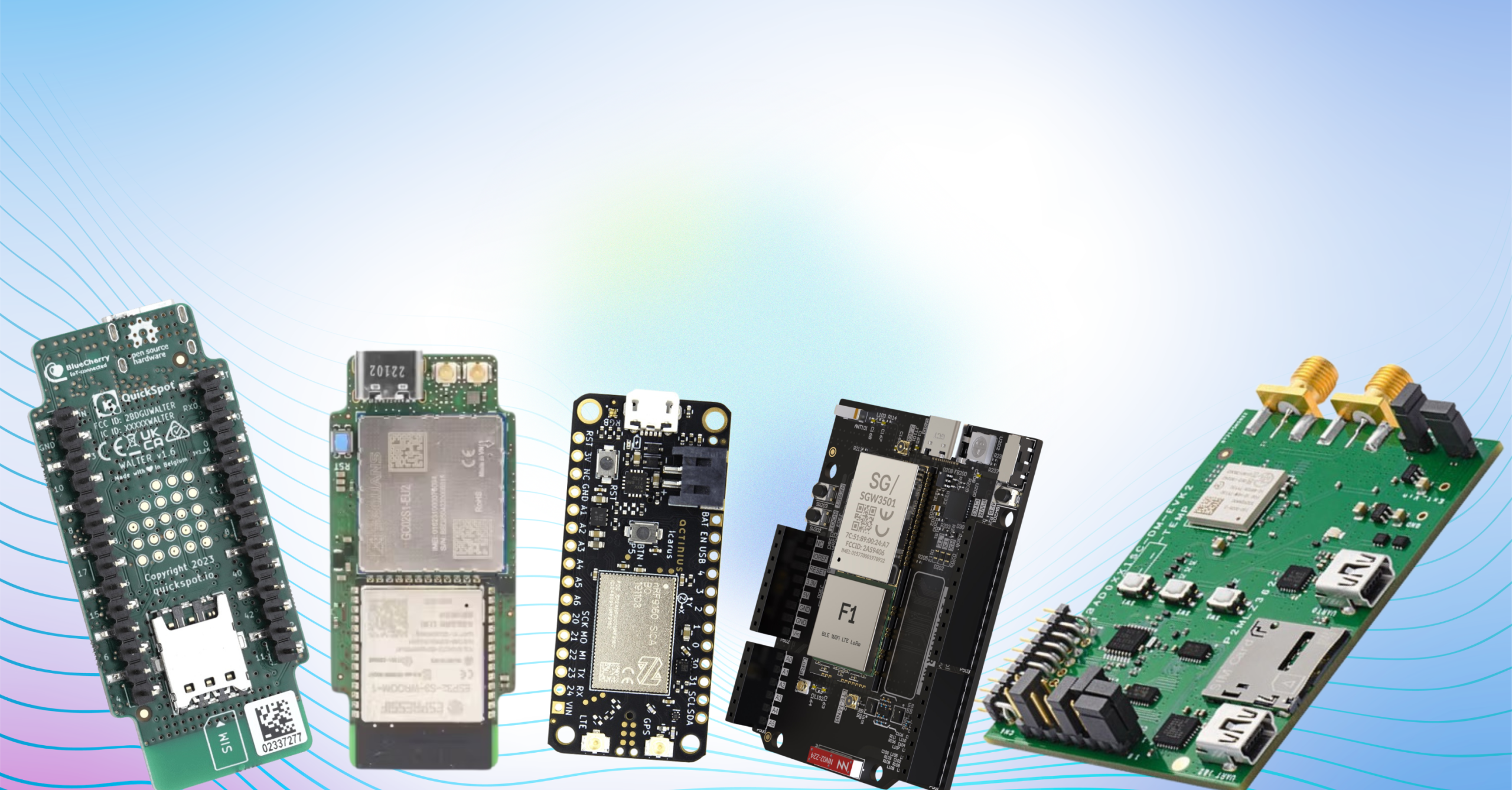
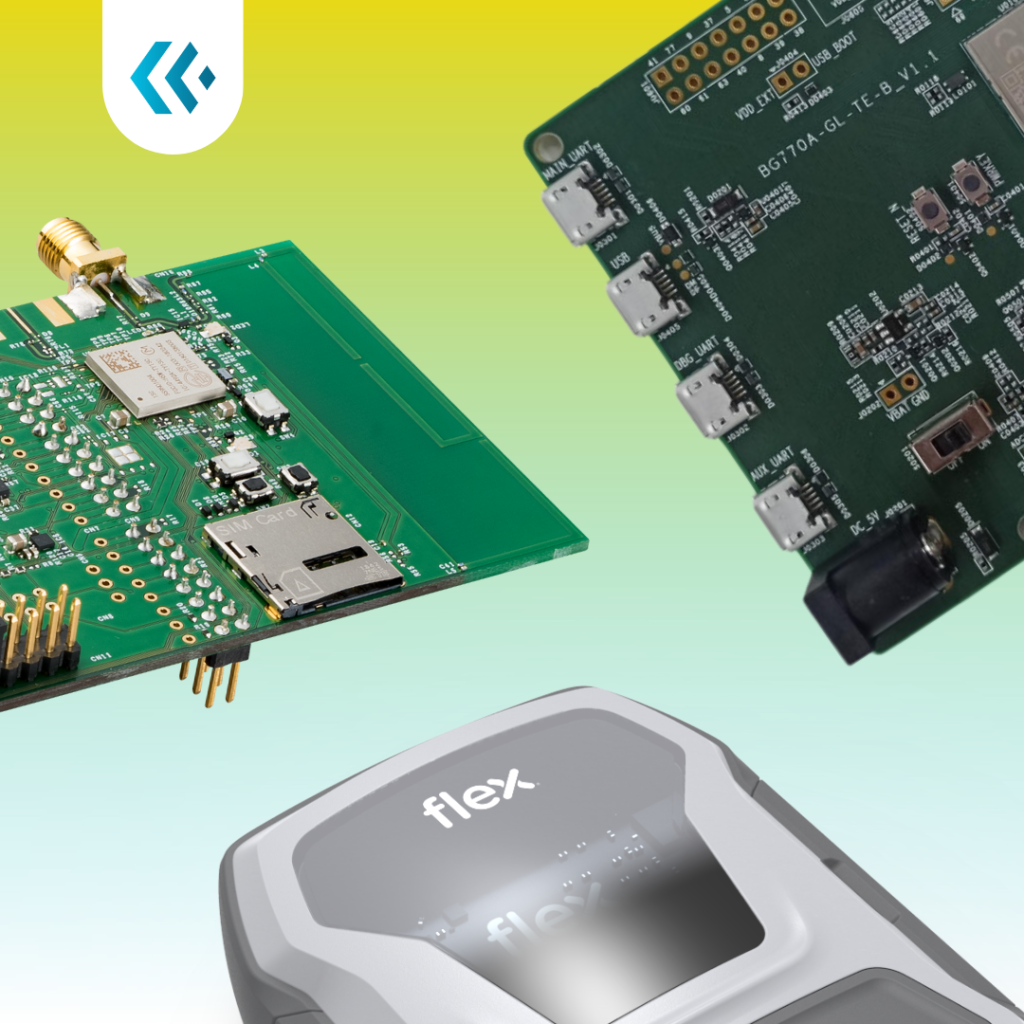
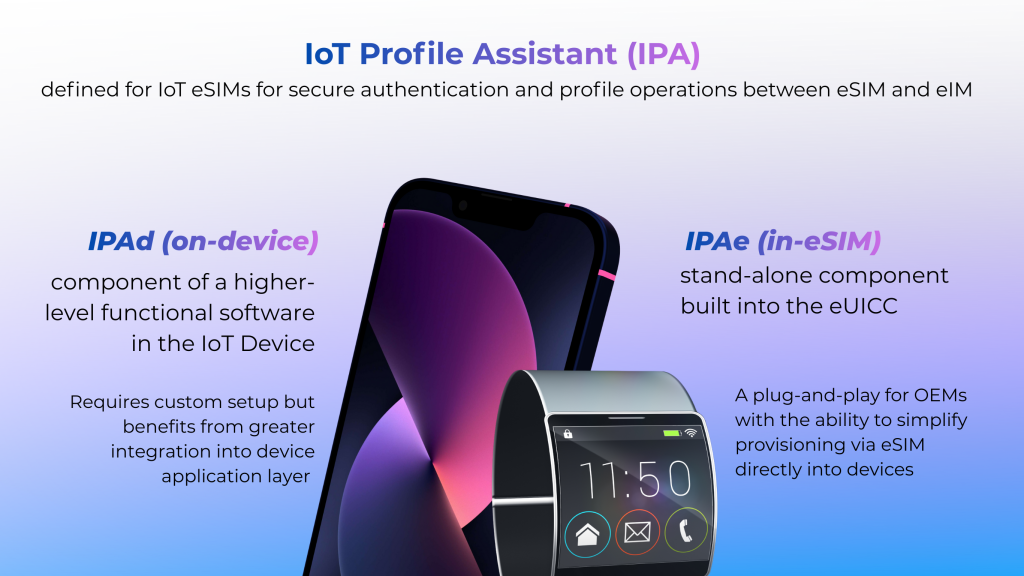
The IoT Stars Reality Check was an independent, multi-vendor test designed to validate whether SGP.32 works in practice. The test used five plastic SIMs with eUICC profiles, each device containing IPAe connected to Kigen’s eIM, across five different host devices. The stated goal was to validate profile migration between three connectivity providers in real time.
The hardware used in the test included:
- Actinius Icarus with nRF9160
- Nordic Semiconductor’s nRF9151DK
- DPTechnics’ Walter with Sequans Monarch 2
- SG Wireless’ F1 Kit
- Murata Type 1SC EVK2
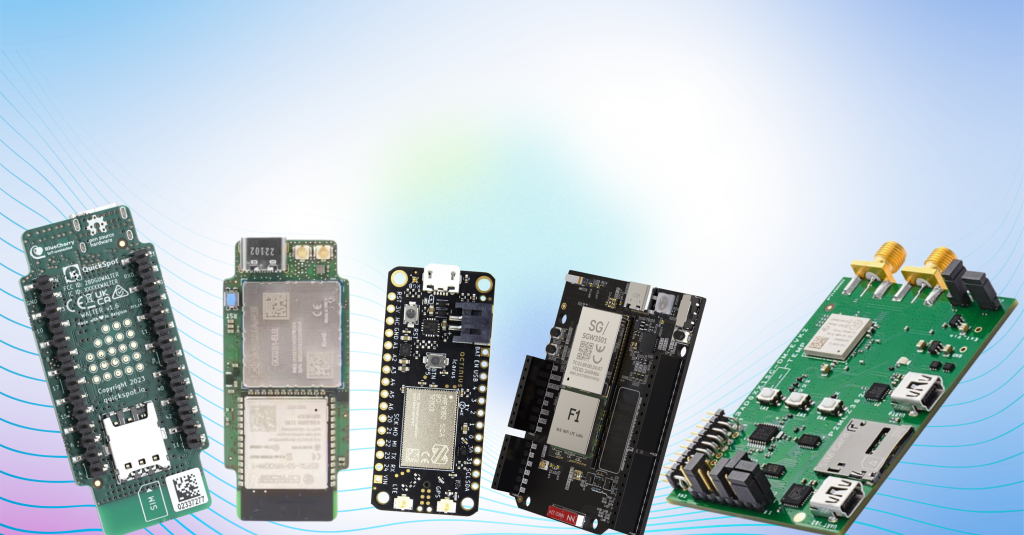
Find these and over 50 leading IoT modules and EVKs tested with the Secure with Kigen program.
The connectivity profiles came from Onomondo, Soracom, and ZARIOT, showing that multiple MVNO and IoT connectivity providers are already part of a working SGP.32 environment, not just future roadmaps. The test environment also showed integrated APIs across Kigen, Soracom, Onomondo, and ZARIOT.
That is the important point: this was not a single-vendor demonstration. It was a practical test of hardware choice, profile choice, and remote management working together.
How Kigen supported the reality check
The Reality Check was built on Kigen’s eSIM and eSIM remote management stack.
At the eSIM layer, Kigen provided eSA-certified eSIMs, available directly from Kigen as blank eSIMs or with minimal activation connectivity. These are available as plastic SIMs with eSIM remote functionality, as well as solderable form factors including MFF2 and MFF4. For ultra-compact designs, MFF4 measures only 2 mm x 2 mm, making it suitable for space-constrained IoT products.
The demonstration used discrete mini plastic SIM form factors, but the software and configuration were the same production-grade baseline used in Kigen SIMs. This is important for enterprises because many deployments need more than a generic eSIM. They may require customized configuration, multiple-profile support, business logic within the eSIM, sustainable plastic options, or production paths that meet specific manufacturing and volume requirements.
At the remote management layer, Kigen provided the Kigen SAS-SM hosted eIM, the key component that brings SGP.32 profile operations to life. Kigen eIM provides the remote SIM provisioning capabilities needed to manage profile operations across IoT fleets.
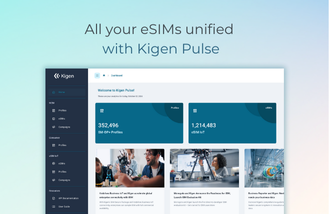
Those capabilities can be accessed in two ways. Admins can use Kigen Pulse, the web-based management console, to view, control, and audit profile operations. Product teams can also use Kigen APIs to integrate the same capabilities into their own workflows, portals, or service platforms.
During the IoT Stars session, Laurens Slats showed both Kigen Pulse and a custom UI he had built using the Kigen Pulse APIs. This was an important part of the demonstration because it showed that the eIM is not just a back-end standards component. It can become the source of truth for profile state management in a multi-vendor, multi-device environment.
Kigen’s own eIM product page positions Kigen eIM as a tested and widely adopted eSIM IoT Manager for SGP.32, with Kigen eSIM OS and Kigen Pulse.
Hardware choice is already becoming real
One of the strongest messages from the Reality Check is that SGP.32 is not tied to a single module, device, or reference design.
Kigen has been working across the cellular IoT ecosystem to support faster, lower-risk development paths. This work is rooted in Kigen’s origins in the Arm Developer and Mbed communities, where robustly tested hardware, well-documented software, and practical developer enablement were essential to adoption.
Since early 2025, Kigen has worked with leading names in trusted IoT modules and evaluation kits to test Kigen eSIMs and IPAe across a growing set of cellular platforms. Today, more than 50 in-demand IoT platforms are supported with the Secure with Kigen promise.
That matters for developers and product teams because the eSIM decision should not force a narrow hardware decision. Product teams should be able to select the module, form factor, power profile, and development environment that best fits their use case, while still having a clear path to SGP.32 remote profile management.
The IoT Stars test showed exactly that. Five different host devices, each using Secure with Kigen-enabled modules, were tested with Kigen eSIMs and Kigen eIM.
SGP.32 connectivity choice from MVNOs is here.
The second major takeaway is that connectivity choice is becoming practical.
The Reality Check used digital activation codes for connectivity profiles from Onomondo, Soracom, and ZARIOT. These profiles were used to show profile download, activation, and switching in a live multi-vendor environment.
That point should not be underestimated. For years, one of the questions around IoT eSIM has been whether the ecosystem would move together. Device makers need hardware support. Connectivity providers need profile readiness. eSIM providers need secure operating systems. Remote management platforms need orchestration capabilities. Developers need tools that make the system understandable and testable.
The IoT Stars test showed these pieces working together.
The ecosystem signal is also broader than the webinar. KORE has announced that it is working with Kigen to deliver SGP.32 IoT connectivity, with Kigen contributing secure, GSMA-certified SGP.32 eSIM and eIM technology to underpin KORE’s enterprise-grade architecture. floLIVE has also announced SGP.32 operational support with Kigen, using Kigen’s SGP.32-compliant eSIM IoT Remote Manager and secure eSIM OS to support a factory-to-field experience.





Explore connectivity options with these and other Kigen partnerships.
Implementation can fit your RSP orchestration workflow
Another important finding from the Reality Check was that SGP.32 implementation can be made simple and adaptable.
The test showed how profile state management works, how eSIM activation works, and how profile switching can be controlled. In Kigen Pulse, these operations are visible, traceable, and auditable. Through Kigen APIs, the same capabilities can be integrated into a customer’s own UI, cloud platform, service workflow, or fleet management layer.
This matters because enterprises rarely want another isolated dashboard. They need eSIM management to fit into the way they already design, manufacture, ship, activate, support, and bill connected products.
A profile operation is not just a technical event. It can be linked to a business rule, a customer contract, a region, a service tier, a data package, or a compliance requirement. By exposing eIM capabilities through Kigen Pulse and APIs, Kigen helps product teams make profile management part of the operational stack, not an afterthought.
What developers can do next
For developers, the most important message is that access is becoming tangible.
SGP.32 is no longer something that only standards specialists can understand. Developers can now evaluate hardware, test profile workflows, use digital activation codes, and integrate eSIM remote management into their own applications.
A practical path could look like this:
Start by reviewing the Secure with Kigen hardware ecosystem and selecting a module or EVK that fits your use case. Then use the Kigen Pulse step-by-step guide to understand how profile operations work in the management console. From there, use Kigen’s device integration guide, C SDK, and reference implementation to connect your device software to the eSIM enablement suite.
If your focus is manufacturing, evaluate how In-Factory Profile Provisioning can support product handovers and factory-to-field connectivity. If you are designing products for the EU market, consider how secure in-field updates and remote profile management can support Cyber Resilience Act readiness.
The point is not that every deployment starts in the same place. The point is that SGP.32 now gives product teams several practical entry points depending on where they are in their journey.
Ready to explore SGP.32?
Come build the next phase of IoT eSIM
SGP.32 gives the IoT industry a cleaner way to separate hardware choice from connectivity choice. The IoT Stars Reality Check showed that this can work across real hardware, real MVNO profiles, and real remote management tools.
For developers, this means a practical way to start testing. For product leaders, it means a stronger path to global deployment. For enterprises, it means a more flexible and secure way to manage connected products over their lifecycle.
With Kigen eSIM stack (certified eSIMs, Kigen eIM, Kigen Pulse, Kigen APIs), Secure with Kigen hardware, and a growing network of connectivity partners, SGP.32 is ready to move from consideration to further real-world deployments at scale.
We’ll follow this up with a part 2 of what to look for as functionalities for real-world deployments when choosing the right eSIM stack.
[Updated: to add ‘Part 2’ links]
Content Authenticity Statement
The research, structural outlining, and content for this article were generated by the author. AI tools were used for proofreading and adjustments to ensure the text can be translated into multiple languages. The final content was reviewed and edited by our team to ensure accuracy.