- Resources
- Blog
- White Paper
Sovereign Grid Connectivity in the Age of Edge AI
—
Energy leaders are rethinking sovereign infrastructure for connected utilities. We explore how eSIM remote management is redefining utility sovereignty—giving DSOs the freedom to manage public and private networks, protect long-life metering investments, and turn edge AI into operational action.
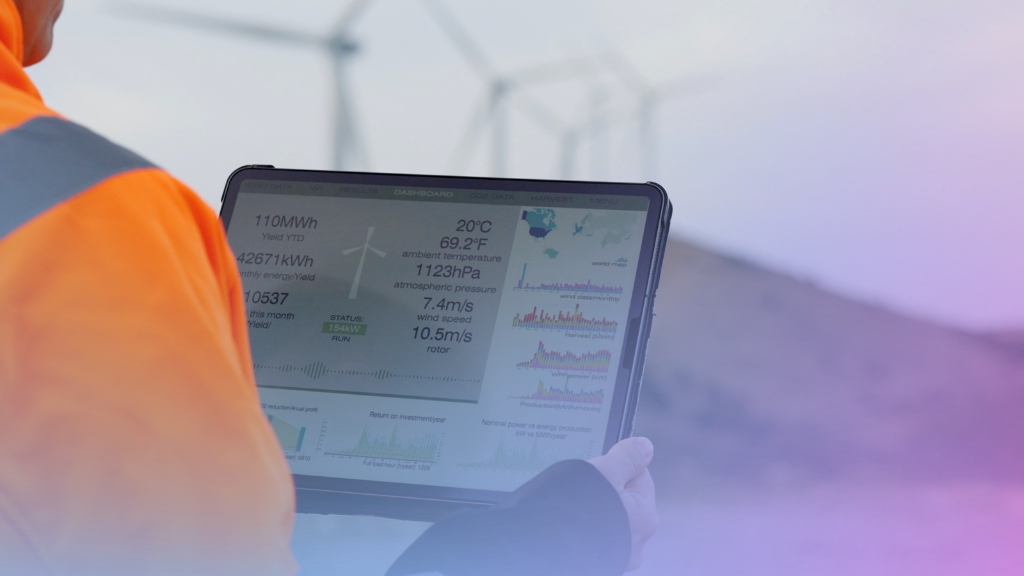
Europe’s energy transition raises a fundamental question: who controls the digital infrastructure that keeps electricity grids connected, secure, and intelligent? For Distribution System Operators (DSOs), sovereignty is more than data residency. It requires assured access to connected assets, freedom to manage providers and networks, and interoperability that protects investment over decades.
Recently, Kigen was recognized as The Fast Mode’s Trailblazer for Private Networks Innovation award winner for enabling some of the world’s most extensive private network deployments in North America and across Europe. We explore the value that Kigen eSIMs and Kigen eIM remote management for IoT can bring to DSOs and utilities in addressing Sovereignty, Integration, Resilient grids and competitiveness, in response to the priorities on the agenda of energy leaders in Europe.
Sovereignty must extend to connectivity management
The European Commission’s Strategic Roadmap for Digitalization and AI in Energy places technological sovereignty alongside secure grid modernization. Eurelectric’s November 2026 cloud-sovereignty recommendations recognize dependencies on non-European providers while emphasizing the operational realities of critical electricity systems. E.DSO’s Cybersecurity and Smart-Metering Task Forces also call attention to lifecycle security as Europe approaches an anticipated 285 million smart meters by 2029.
For utilities, practical sovereignty extends from the cloud to the field: who can securely provision, change, audit, and restore device connectivity when network conditions or commercial agreements change?
“For a DSO, sovereignty is not simply where data is hosted. It is the ability to retain control over how connected infrastructure is managed throughout its lifetime, beyond the first contract, with assured operations that withstand disruptive network changes. The latest evolution of eSIM Remote eSIM management creates a new option: securely manage network profiles remotely, preserve choice between providers, and maintain that control across changes without physically revisiting every asset.”
Toby Grimshaw, VP of Business Development, Kigen
Where public networks may not meet the coverage needed by utilities – often at fringes of metropolitan areas. Sovereign control is becoming a key driver for private networks to preserve the availability and choice, especially as grid connectivity is part of the critical infrastructure. Further, the advances of frontier models of AI are driving cybersecurity threats which can be addressed through the best-in-class secure-by-design architecture starting with eSIMs.
Advanced metering needs assured connectivity resilience
AMI 2.0 is moving beyond billing toward grid visibility, distributed generation, and demand flexibility, and doing so at speed. Gavin Farrand, Senior Vice President of Sales, UK and Europe at Trilliant, advocates interoperable communications architectures that allow utilities to respond as grid requirements change. As reported by Enlit World, HEDNO CEO Anastasios Manos describes the connection among Greece’s national smart-meter program, AI, and digital grid modernization.
Gösta Kallner, Chairman of the 450 Alliance, and Noel Kirkaldy, Head of Spectrum Management at Nokia, point to the role of dedicated networks for mission-critical utility communications. Public cellular networks and private infrastructure need not be treated as mutually exclusive: the strategic issue is whether utilities can govern network access, move between eligible profiles, and design tested recovery paths. No single connectivity technology guarantees uninterrupted service.
Rethinking grid connectivity for AI at the edge
Andrew Foster, Chief Product Officer at IOTech, asks how utilities can retain visibility and governance over AI models deployed throughout remote operational environments. David Kushner, Director of Product Management at Itron, emphasizes trusted data architectures that make grid information reusable across applications. Useful low-voltage intelligence begins with trustworthy measurements and operational understanding, not algorithms alone.
That shift, from AI analysis to AI-enabled action, requires dependable pathways from a field observation to an authorized response. The connectivity layer must support secure device identity, available telemetry, remote operational updates, and recoverable communications, while AI model assurance remains a separate requirement.
“Edge AI becomes valuable when grid operators can act on trusted information, not just generate another prediction. Combining secure eSIM management with public and private network options gives DSOs a more adaptable connectivity foundation for telemetry, remote action, and recovery—while keeping operational decisions under utility control.”
Paul Bradley, VP of Europe Sales, Kigen
From connected infrastructure to sovereign control
Kigen helps DSOs establish that foundation through GSMA-certified eSIMs, SGP.32 Remote SIM Provisioning, and interoperable eIM connectivity management. These capabilities can support secure network-profile changes, provider choice, and device lifecycle management across long investment horizons, subject to device compatibility, service agreements, coverage, and recovery architecture.
Recognized with The Fast Mode’s 2026 Private 5G Trailblazer Award for Innovation, Kigen supports secure connectivity approaches that help utilities evolve their infrastructure as grid intelligence matures. Kigen is an active contributor to the Utility Broadband Business Alliance (UBBA), Anterix Active Ecosystem, 450 Alliance, supporting utilities, advanced metering manufacturers, and full-stack integrations such as the OneLayer Technology Alliance Program (TAP), among others.
Frequently asked questions
What is sovereign grid connectivity for DSOs?
It is the ability to govern critical communications, device identities, providers, and lifecycle operations without unnecessary dependence on one supplier. European data residency alone does not deliver this operational control.
How does SGP.32 eSIM improve smart-meter resilience?
SGP.32 supports remote management of compatible IoT eSIM network profiles, reducing the need for physical SIM replacement. Availability still depends on live networks, coverage, contracts, device capability, and tested recovery plans.
Why does interoperability matter for AMI 2.0?
Smart-meter infrastructure can remain deployed for many years while applications and networks evolve. Interoperability preserves integration options, supplier choice, and flexibility for remote lifecycle management.
What connectivity does AI at the grid edge need?
Edge AI needs authenticated devices, dependable telemetry, secure communication, controlled updates, and pathways for authorized actions. Trustworthy AI also requires accurate measurements, model governance, and operator oversight.
<